


Intro
There are a total of 501 chains (L1, L2) currently tracked on DefiLlama. Among these, 32 L1s and 15 L2s were launched this year.
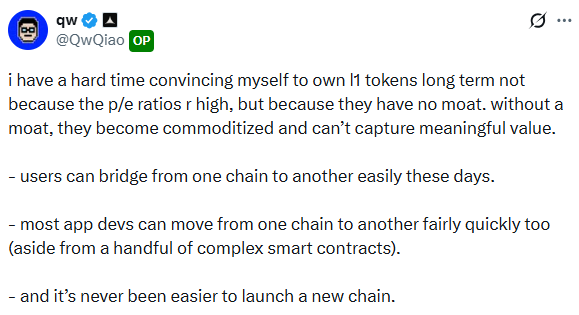
However, approximately 95% of the total TVL is concentrated in just 5 chains, with over 68% concentrated in Ethereum alone. Many new L1s and L2s gather significant attention and liquidity before their launch, but immediately after TGE, both liquidity and users vanish as if they were never there.
Due to this, there was a period where “airdrop farmers” were blamed. However, in current times where new users and liquidity are scarce and market conditions are unfavorable, there is a growing sense of doubt and skepticism regarding whether “new chains” are needed in the first place.
Amidst rising market fatigue towards new Layer 1/2 chains, MegaETH is approaching its mainnet launch. In the Conviction Round held last October, it recorded an oversubscription of 28 times the target amount, attracting the largest scale of funds last year. However, the fundamental market skepticism facing new chains is a challenge MegaETH must also resolve.
In this article, we will judge whether MegaETH can survive as a chain with meaningful competitiveness among countless others, and based on this, we will attempt a valuation of MegaETH’s native token, $MEGA.
Furthermore, starting with this report, we intend to continuously publish valuation analyses on promising “Pre-TGE” stage projects ahead of their launch. The background for planning this analysis series lies in the structural limitations currently facing the crypto market.
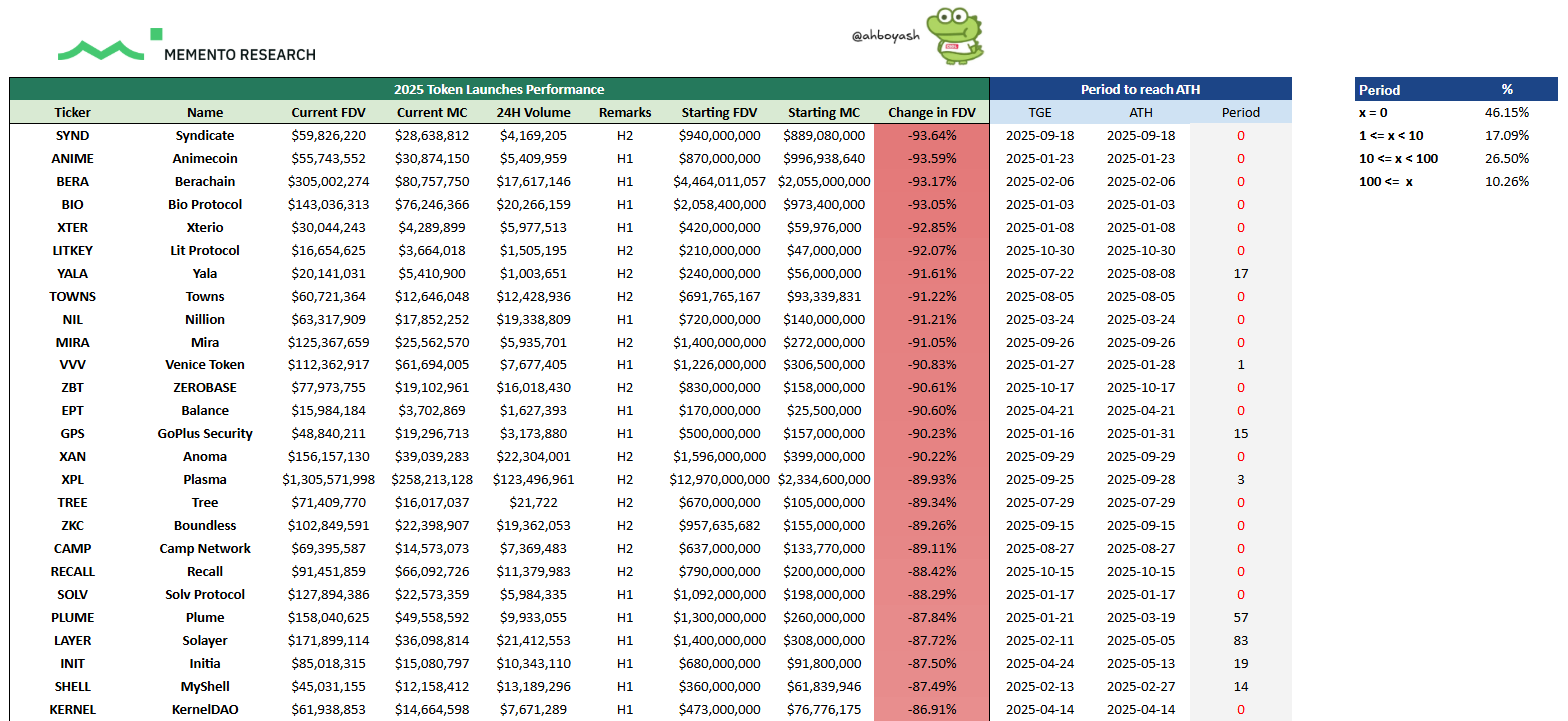
According to Ash from Memento Research, over 84% of the 118 tokens introduced to the market this year are currently trading at a price lower than their TGE price. In particular, the fact that over 46% recorded their ATH on the day 1 and then turned to a downward trend is significant. This shows that the majority of projects monopolize market attention only immediately after TGE, but fall into a “short-term speculative pattern” where they are pushed out of investors’ interest in less than a day.
However, not all market flows are like this. Blue-chip assets like Bitcoin, Ethereum, and Solana exist, proving their value over the long term and renewing ATHs. Among projects launched within the last year, Hyperliquid and Zora are achieving price increases alongside fundamental growth.
If we can judge a project’s value more precisely based on fundamentals, we can move away from the short-term approach of mechanical selling (Dumping) immediately after listing and capture true investment opportunities. Now, rather than simple trading timing, a project’s “sustainability” and “substantial intrinsic value” must become key investment indicators.
Key Takeaway
MegaETH has succeeded in reducing block time to 0.01 seconds to create a real-time blockchain.
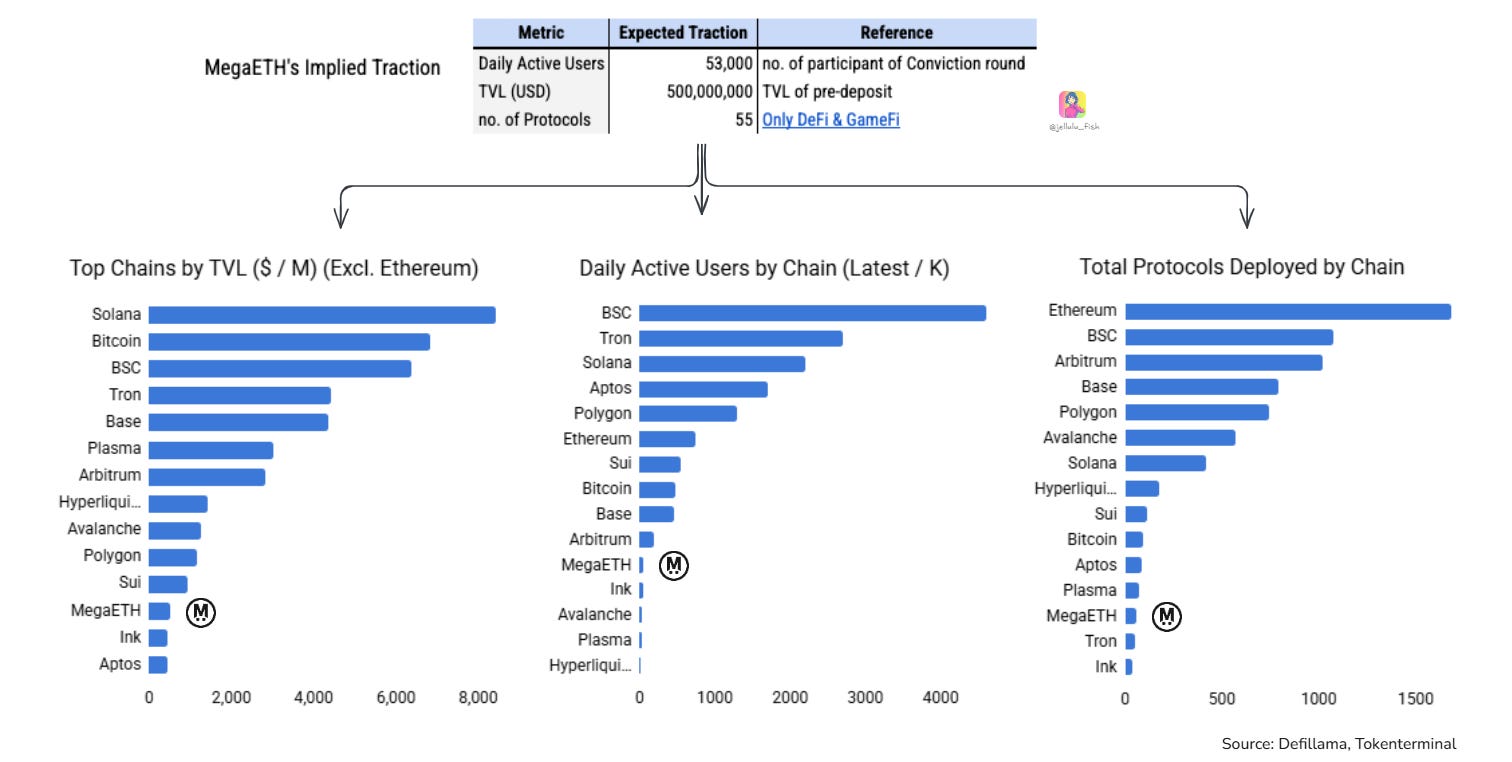
Judging by the results of the public sale and pre-deposit, MegaETH appears capable of entering the ranks of the top 14 chains upon mainnet launch.
Due to MegaETH’s tokenomics structure, short-term dumping is expected to be minimal. Long-term utility and revenue are strong, but the token deflation aspect is judged to be weak.
The most agreed-upon valuation for $MEGA is $2B ~ $2.3B. However, if market recovery and revenue-based value capture proceed smoothly, the author views $4B as the base valuation.
Furthermore, if MegaETH proves PMF (Product-Market Fit) as a differentiated L2 and achieves growth beyond expectations, there is room for upside from $6B to $12B.
(※ Due to the length of this article, I intend to publish it in two parts. Part 1 covers the fundamental background of MegaETH (Tech Stack, Team, Competitor Analysis, and Ecosystem), while Part 2 will address the tokenomics analysis and the $MEGA token valuation analyzed from six different perspectives.)
Background
1) Business/Technical Structure
Why MegaETH?
The core goal of MegaETH is to create a real-time blockchain. MegaETH aims to make this possible by providing 100,000 TPS and 10ms (0.01s) block times.
In the case of Web2 services we typically use, user requests are processed in about 0.15 to 0.4 seconds, and the results are delivered through the app/site screen. This timeframe can be seen as what we perceive as “real-time”.
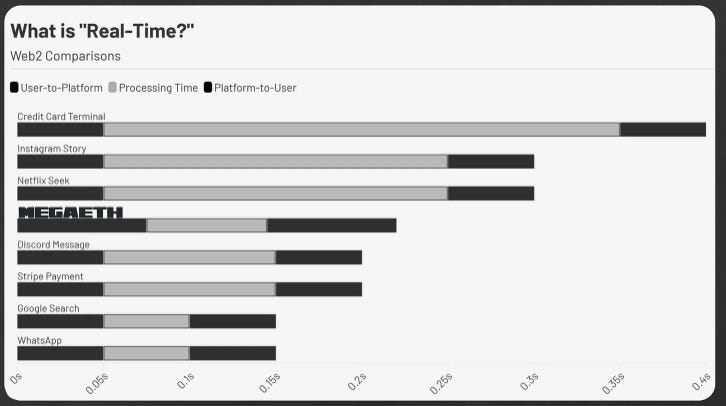
On the other hand, most existing blockchains take over 1 second just for block time (processing time), and latency is also about twice as high as Web2. Therefore, even a blockchain considered fast (1.2s) requires a waiting time about 3 times longer than the slowest Web2 service (0.4s).
MegaETH aims to provide services in real-time like general Web2 by reducing block time, which accounts for the largest portion of user waiting time, to within 0.01 seconds. Accordingly, the total latency is about 0.21 seconds, which sufficiently falls within the “real-time” category of Web2.
Tech Stack 1 - Node Specialization and Hardware Optimization
MegaETH’s structure is a realization of the “Endgame” presented by Vitalik Buterin. It maximizes block creation efficiency by basing its structure on centralized high-performance nodes (Sequencers) for block creation, while decentralized light nodes perform verification.
The reason MegaETH is developing an L2 rather than its own L1 is that L2 has the optimal structure for performance. In the case of L1, all nodes must perform the same tasks (computation, verification, storage), requiring identical specifications. This acts as a constraint in determining how much hardware requirements for general users to run nodes can be increased to boost performance without damaging the blockchain’s decentralization.
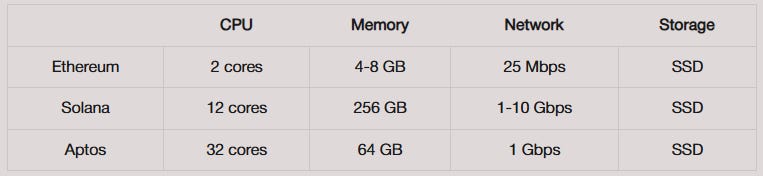
However, L2s like MegaETH use Ethereum as a settlement layer and EigenDA as a DA layer, delegating security and censorship resistance to the base layer. This allows them to configure nodes to focus solely on performance enhancement. Consequently, MegaETH distinguishes nodes into four types, differentiating the missions and spec conditions for each, specifically concentrating high-spec conditions on the Sequencer.
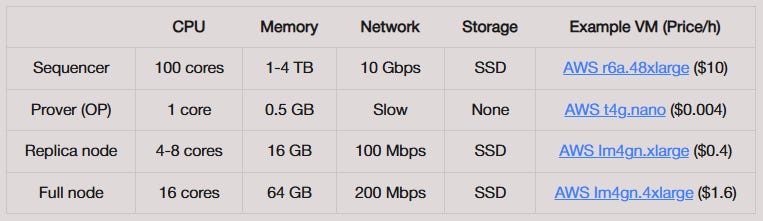
MegaETH’s Sequencer requires a high-end server with 100+ CPU cores, 1-4TB of high-capacity RAM, and 10Gbps bandwidth because the Sequencer exclusively handles block creation and transaction execution on L2. Verification and full nodes, with lower specs than the Sequencer, are separated into roles of verifying the Sequencer’s results or storing state, allowing the entire network speed to become as fast as the Sequencer’s processing speed.
Tech Stack 2 - Dual Block Processing Mechanism
The MegaETH Sequencer processes blocks in parallel by handling 100 high-frequency mini-blocks per second while bundling EVM blocks periodically every 1 second. Mini-blocks consist of a compressed transaction list and minimal metadata to reduce data load and, most importantly, are created every 0.01 second to provide real-time Pre-confirmation and APIs.
Also, to be compatible with the existing Ethereum ecosystem, it bundles mini-blocks via EVM blocks at 1-second intervals to change the EVM state. This guarantees perfect compatibility, allowing immediate integration with MegaETH without needing to reconstruct Ethereum’s core infrastructure or systems.
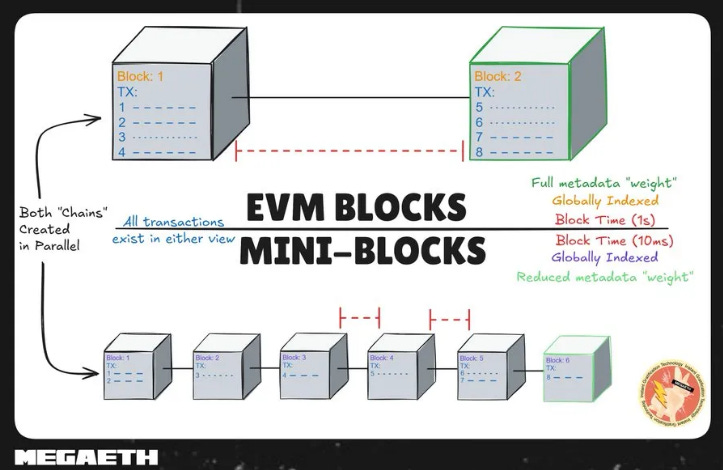
However, simply increasing hardware performance and centralizing nodes does not rapidly speed up the chain. According to MegaETH’s research, even using a server with 512GB RAM results in only 1,000 TPS, and parallel processing only doubles the speed. This implies bottlenecks exist not only in node performance or tx processing methods but also in how data is read/written and state synchronization.
Tech Stack 3 - Data Structure Change and Real-Time State Sync
MegaETH aims to change many fundamental structures beyond node configuration to analyze existing L2 structures and remove bottlenecks. It introduced a “new data structure” to retrieve and update data directly in memory instead of disk. It also developed a proprietary protocol that allows other nodes to efficiently sync blocks created by the Sequencer every 10ms by reflecting only the state changes (Diff) delivered by the Sequencer into their database without re-performing complex computations.
MegaETH plans to use a single Sequencer in the short term but intends to decentralize this by having multiple Sequencers in the future, applying market economy logic to maintain an efficient structure.
2) Team
MegaETH was founded by three co-founders with strengths in both technology and BD. Yilong Li and Lei Yang hold Ph.Ds in Computer Science from Stanford and MIT, respectively, playing key roles in implementing MegaETH’s ultra-low latency.
Shuyao Kong, a Harvard Business School graduate and former Global Head of BD at ConsenSys, leads MegaETH’s unique market positioning. Active on X (formerly Twitter) under the persona “Brother Bing,” she communicates casually with the community and incorporates her fashion sense into branding, introducing differentiated goods and sensual NFT designs. This strategy contributes significantly to imprinting MegaETH not just as a technology project but as a “brand” with a strong fandom.

3) Raising History
MegaETH conducted a total of 5 raising rounds, collecting a total of $93.5M. In the first pre-seed round, the foundation bought back 4.75% of token equity from investors to reallocate it for the community. In the Seed round, not only top-tier VCs like Dragonfly participated, but key contributors to the Ethereum ecosystem like Vitalik, the ConsenSys CEO, and Hasu participated as angels.
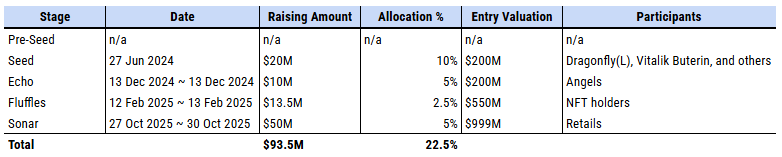
MegaETH proved its market popularity through three community raisings. In particular, the public sale “Conviction Round” attracted a total of $1.39B in community funds, which is an overwhelming figure about 5 times higher than Monad ($269M), which attracted the second-largest amount.

Shuyao Kong adopted an “English Auction” method for true price discovery but demonstrated leadership considering both investor protection and sustainable growth by setting a price cap of $0.999 to avoid excessive valuation before mainnet launch.
4) Market and Competitors
Ethereum and L2
The “Endgame” written by Vitalik Buterin in Dec 2021 signaled the opening of the full-scale L2 era with a roadmap where “Rollups become the core infrastructure of the Ethereum ecosystem”.
“Once again, we get a world where block production is centralized, block validation is trustless and highly decentralized, and censorship is still prevented...” - Vitalik from Endgame
Subsequently, major rollups like Optimism, Arbitrum, zkSync, and StarkNet appeared, activating the L2 ecosystem. EIP-4844 (Dencun upgrade), key for rollup-centric scaling, introduced a non-execution data format called “Blob”. This reduced gas costs by over 10 times compared to the existing Calldata method but raised concerns about cannibalizing Ethereum’s revenue.
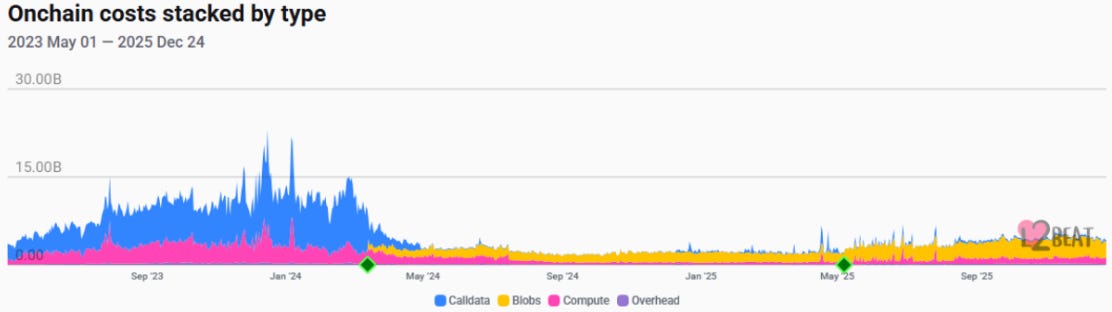
However, judging that rollups hinder Ethereum’s growth is premature. Following the Pectra upgrade, which doubled the Blob allowance per block, related demand and usage have increased, leading to a rebound in on-chain costs.
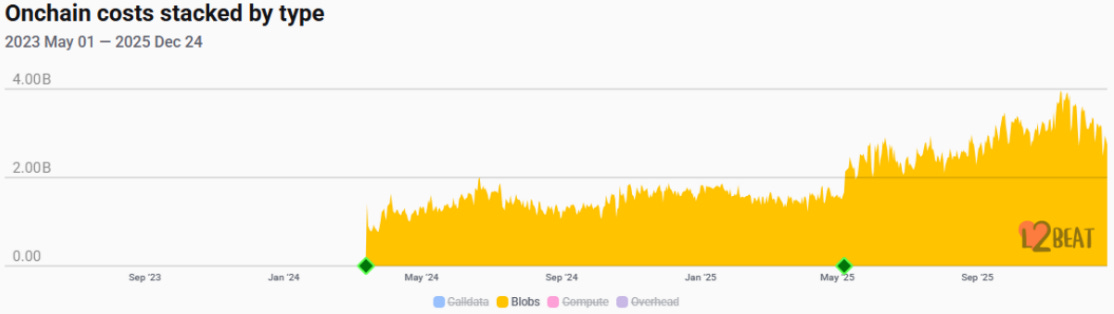
Vitalik Buterin and the Ethereum Foundation still evaluate rollups as a key stage of the roadmap and define the relationship between Mainnet and Rollups as a “Symbiotic Partnership”. Indeed, both Pectra and Fusaka, the major upgrades last year focus on reducing rollup costs and resolving Data Availability (DA) issues.
This move reflects Ethereum's unique philosophy of not confining the network to specific industries or purposes, but rather securing broader scalability to encompass diverse ecosystems
“The profound benefit of the Ethereum rollup-centric roadmap is that it means that Ethereum is open to all of the futures, and does not have to commit to an opinion about which one will necessarily win.” - Vitalik from Endgame
Comparison with Top 14 TVL Chains
Currently, L2Beat registers 128 L2s, and DefiLlama tracks over 500 total chains. While Rollups seem like a “common destiny” with Ethereum as they rely on it for settlement, they are on their own path for survival. Like independent L1 chains, they must secure liquidity via bridges, induce users to add the chain and generate transactions, and compete to attract attractive dApps for retention. Thus, L2s must compete not only with peer L2s but with all L1 chains that are “faster and cheaper than Ethereum”.
As mentioned, the latency for “Real-time” Web2 services is about 0.4s. To implement this on blockchain, block time must be within 0.2s (considering latency). Among the top 14 chains by DeFi TVL, only Hyperliquid and Aptos support block times under 0.2s. Including Sui and Arbitrum, only about 4 are close to real-time. However, we sometimes feel bored even with 0.3s required by Instagram or Netflix. The time we truly perceive as real-time is somewhere between 0.15s and 0.3s. To provide this UX, block time must be shortened to the 0.01s level, and MegaETH is the only one to achieve this record so far.
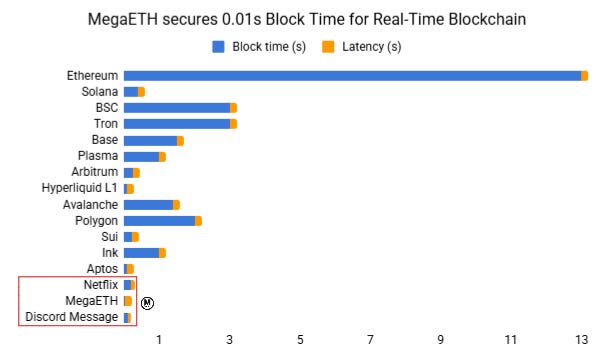
However, simply being fast does not automatically bring liquidity, users, and dApps. Considering the recent Conviction Round, Pre-deposit results, and ecosystem support program (Mega Mafia), MegaETH already possesses business and strategic competitiveness comparable to the top 14 chains. If this trend is maintained, it is projected to sufficiently enter the top 14 by Market Cap or TVL upon mainnet launch.
5) Ecosystem
Mega Mafia
Mega Mafia is the flagship accelerator program of the MegaETH ecosystem, aiming to build dApps possible only on MegaETH. Two cohorts have been conducted so far, onboarding 28 projects. The 13 teams in the first cohort raised over $40M from top VCs like Franklin Templeton and Robot Ventures during the cohort period.
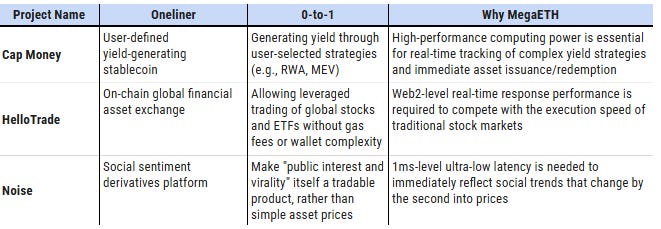
Mega Mafia consists of services like consumer apps and HFT-based DeFi that must be literally “real-time,” which were difficult to implement due to latency issues in existing blockchains. MegaETH’s differentiation arises not just from the speed users feel, but from the services/dApps composing the ecosystem. The Mega Mafia program eschews the approach of simply forking and replicating dApps from existing chains. Instead, it fully supports the development of innovative '0 to 1' based apps that create unprecedented value by leveraging MegaETH's overwhelming performance.
Projects like Cap Money, HelloTrade, and Noise are prime examples that empirically demonstrate why builders and users must choose MegaETH.
Independent Infrastructure Construction
MegaETH is strategically using external partnerships to build unique core infrastructure. It launched RedStone Bolt, optimized for MegaETH’s processing speed, to provide real-time price feeds.
Also, through a partnership with Ethena, it plans to issue its own stablecoin, USDm. USDm is based on Ethena’s USDtb stack and invests over 90% of collateral assets in BlackRock’s tokenized fund, BUIDL. This blocks bridge risks from external stablecoins while returning yield generated from collateral assets like government bonds to the ecosystem development fund, promoting sustainable growth.
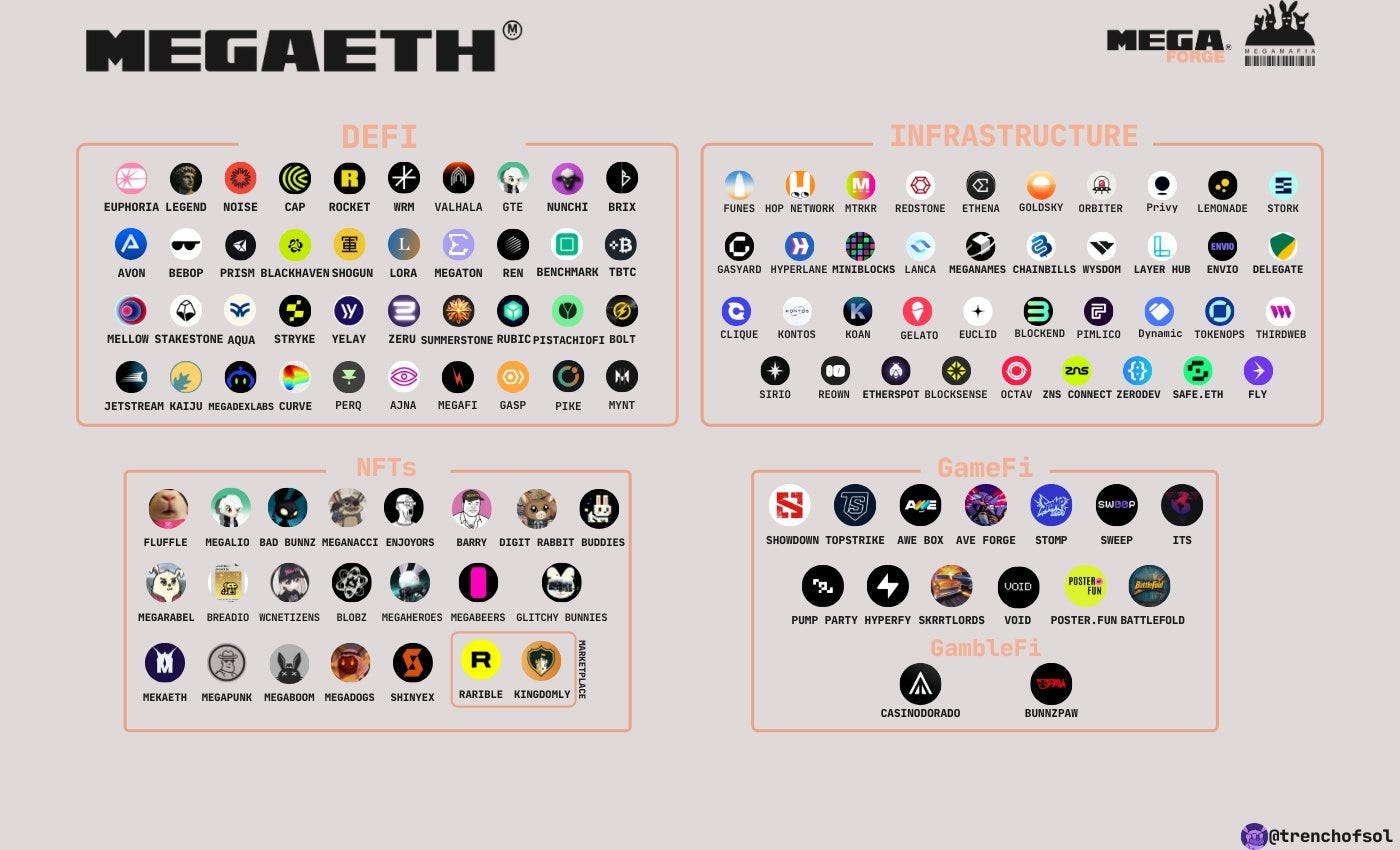
The entire ecosystem of MegaETH is as follows:
Thanks for reading jellulu_fish's Substack! Subscribe for free to receive new posts and support my work.